General Construction in Fort Wayne & Grabill, Indiana
// General Construction
The Parts Other Contractors Won't Touch
Decks, framing, structural repairs, additions. General construction covers the projects that need real building experience, not just finish work. GNG handles it with the same crew that builds our custom homes.
This is the trade underneath the other three. It is the same crew that handles custom home building, the framing behind our remodels and additions, and the deck work that gets tied into a roof or a porch on our roofing jobs. See all of our services.
// What We Build
General Construction We Handle
// Definition
What Counts As Structural Work
If it is holding something up, it is structural.
Structural work is anything that changes or repairs what carries load in a building: framing, beams, headers, posts, joists, rafters, and the foundation elements under them. Replacing a rotted rim joist is structural. Removing a wall that holds up the floor above is structural. Refinishing the room around it afterward is not. The practical test is whether the piece being changed is holding something up, and whether taking it out means the load has to go somewhere else instead.
That distinction is worth knowing as a homeowner, because it decides who is qualified to do the work and whether the job needs a permit and an inspection. Plenty of contractors do excellent finish work and will still, correctly, decline a header replacement. It is also why structural jobs get quoted so differently from one company to the next: some of those bids are pricing the repair, and some are pricing the repair plus the load path that makes the repair legitimate.
GNG runs structural work with the same crew that frames our custom homes, which is why we take the jobs that get turned down elsewhere.
// Straight Answers
General Construction Questions, Answered
// Decks
Why Most Decks Fail At The House, Not In The Field
The most common serious deck failure is not the boards giving way in the middle. It is the ledger, the board that fastens the deck to the house, pulling loose or rotting out the rim joist behind it. That happens for two reasons: the ledger was nailed instead of through-bolted or lag-screwed to structure, or it was never properly flashed, so 15 years of rain ran down the siding and sat between the ledger and the house.
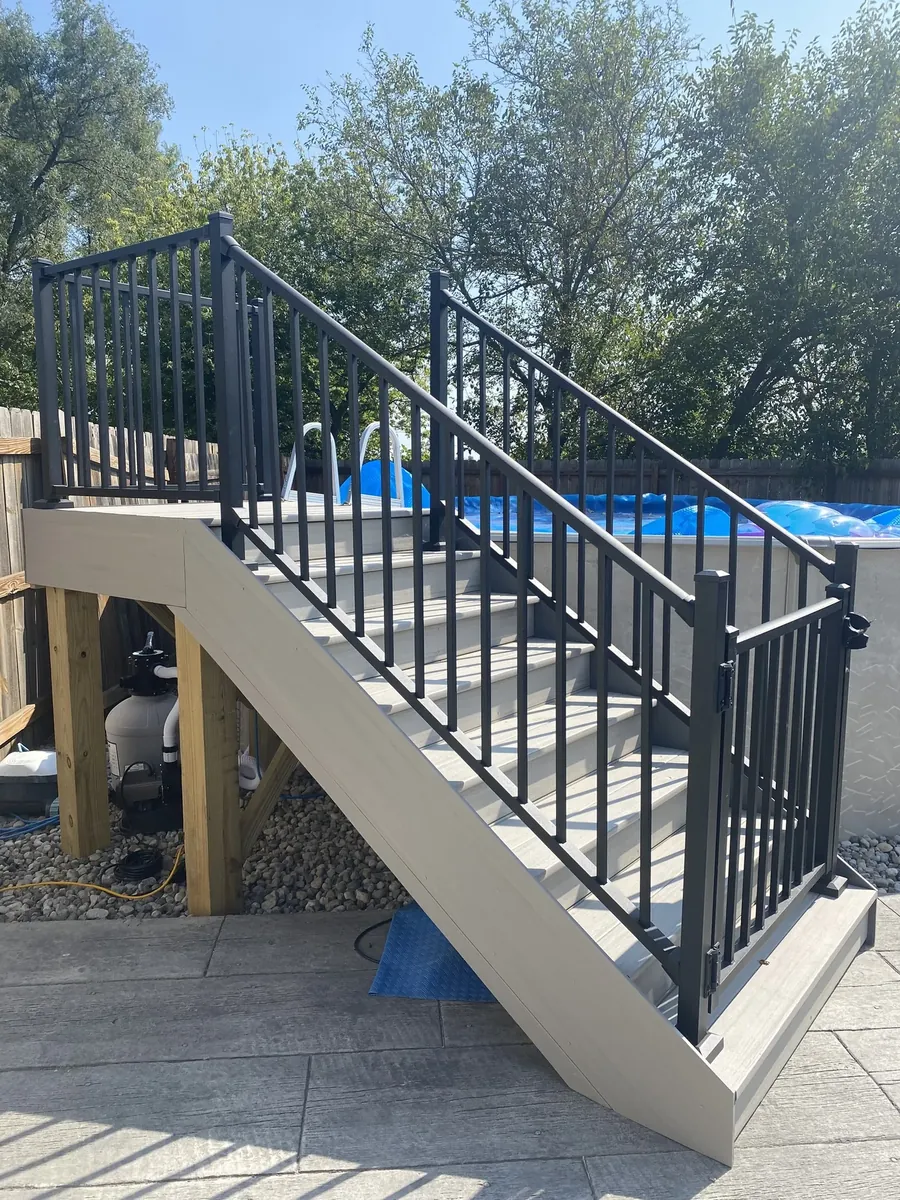
The rest of a deck is straightforward if the fundamentals are respected. Footings go below the local frost line, which the county sets, so the deck does not heave with the ground each winter. Posts sit on the footings with proper hardware rather than buried in dirt. Joists get hangers, and the fasteners are rated for contact with treated lumber, because untreated fasteners corrode in it. Guards and stairs get built to the required height, spacing, and rise consistency.
Composite decking and wood are both fine choices, and that decision is about maintenance appetite and budget rather than structure. What holds the deck up is the same either way, and it is the part nobody photographs.
// Who Does The Work
The Crew Behind The Other Three Trades
GNG Roofing & Construction is an Amish-owned family business in Grabill, Indiana. General construction is the trade the other three rest on: the same crew frames our custom home building projects, handles the structural side of our remodels and additions, and does the framing repair that shows up under a failed roof.
We have been building in Northeast Indiana for more than 34 years, we are licensed and insured, and the work carries a 10-year craftsmanship warranty. Google reviewers rate us 4.9 out of 5 across 30 reviews. Nothing is subcontracted out, which on structural work is less a preference than the point. Read about the family behind GNG.
// Recent Work
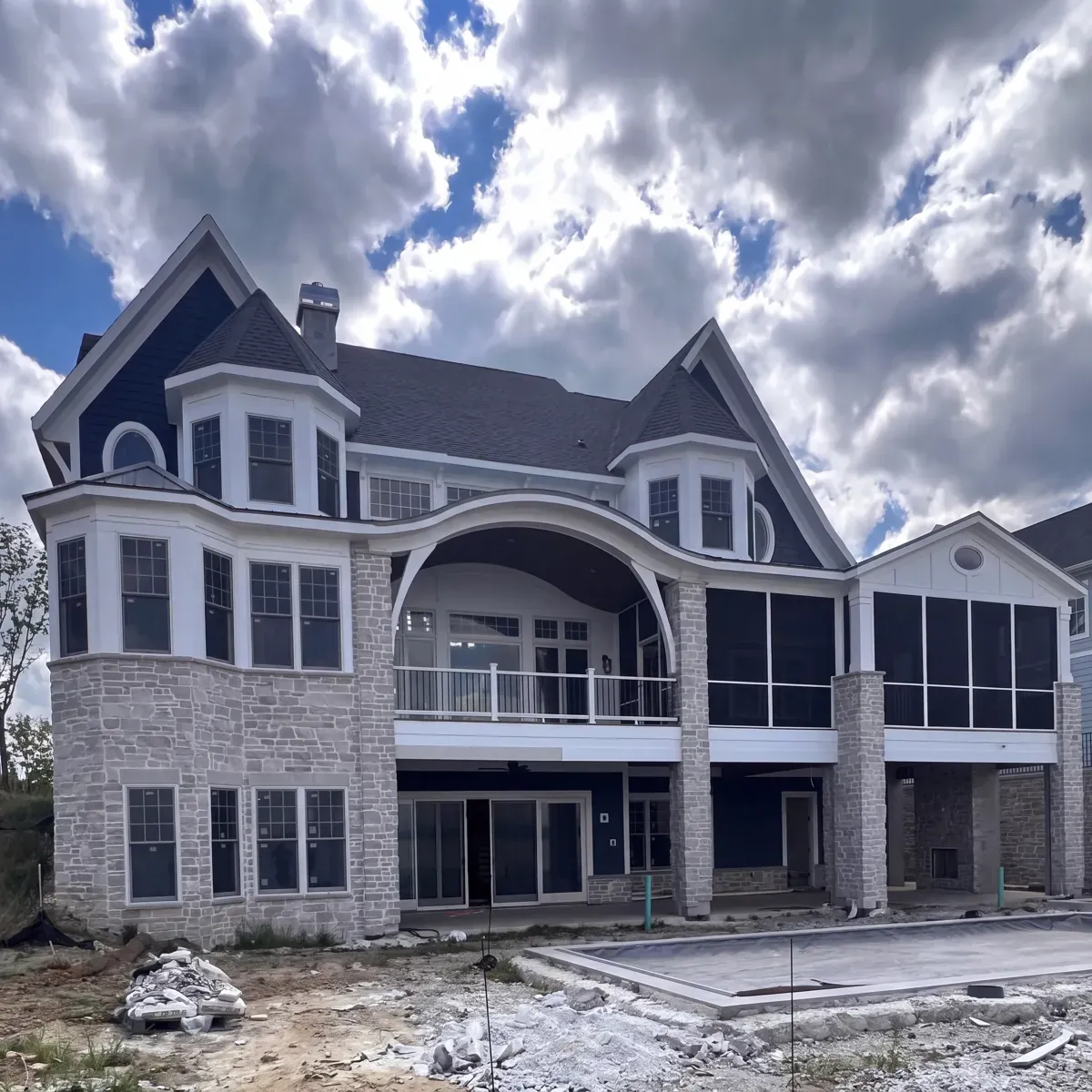
Projects We've Built
// FAQ
General Construction Questions
What kind of structural work do you take on? ▾
Framing repairs, load-bearing wall changes, deck and porch construction, and additions that need real structural work, not just cosmetic changes.
Do you build decks and porches? ▾
Yes, decks and porches are one of our most common general construction projects.
Can you handle post-storm structural repairs? ▾
Yes, if a storm damaged framing, a porch, or another structural element, we can assess and repair it.
Can you remove a load-bearing wall? ▾
Yes. Removing a load-bearing wall means replacing it with a beam sized for the load, carried on posts, over a load path that runs continuously down to a footing or foundation that can take it. That last part is the one that gets skipped: a beam on a post standing on an unsupported stretch of floor has just moved the problem. Depending on span and load the design may need an engineer, and the work generally needs a permit and inspection.
Do I need a permit for a deck or structural repair? ▾
Usually, and the rule is set by the city or county where the property sits rather than by the state. Decks past a certain height or size, load-bearing changes, and structural repairs generally require a permit and at least a footing inspection. We pull what the local jurisdiction requires and schedule the inspections as part of the job.